|



 |
⏰ 1-SECOND SUMMARY
Twitter rebranded as the letter X
Threads rolled out a chronological Following feed and TikTok launched text posts… what does it all mean?
Where are celebrities spending their time: Instagram, Threads or Twitter?
This YouTuber got a Nike sponsorship before he even posted his first video — his advice is below 🔽
💻 ROADMAP
📲 YouTube Updates
YouTube Studio settings are getting an update that will allow creators to more easily edit their channel banner and navigate between accounts through settings. The layout’s also being reorganized into more intuitive categories.
📲 Twitter Updates
Over the weekend, Elon Musk suddenly announced Twitter would be renamed as X. Surprised? So were employees, partners, advertisers, app users and the rest of the world.
No one but Musk and his CEO seemed to have any idea what was happening. It took over 24 hours after Musk’s pronouncement for branding on the app to catch up. And it’s still not consistent.
There was no plan for replacing Twitter’s real life signage. A crew removed half the sign on its San Francisco headquarters but paused when the police showed up and put a stop to it.
No one secured the X handle. On Tuesday, it was taken away from the person who had used it for the past 16 years. Reminder: you don’t own your social media handles, tech lawyer Franklin Graves tweeted.
No one looked into securing rights to X which means Meta, Microsoft and hundreds of other companies already have intellectual property rights to the same letter. "There's a 100% chance that Twitter is going to get sued over this by somebody," trademark attorney Josh Gerben told Reuters.
No one got a heads up about the switcheroo, despite how it impacts things like web design, product packaging and other partners. CBS’s Superfan show host Keltie Knight pointed out the show plans to use Twitter as its voting platform — something they won’t be able to update in time for launch.
Apparently no one told Musk the move-fast-and-break-things era is over. His ambition to be the everything app — “centered in audio, video, messaging, payments/banking” – is interesting but only works if people are still logging on. That won’t happen if X becomes the most hated place on the internet.
“You can test unmanned rockets, and if they blow up on take-off or re-entry, you’ve learned something, no harm done. But running the same test on a social media service is like testing rockets with your users as passengers. Crash a rocket and those users aren’t going to be around for the next test flight.” -Eugene Wei
📲 Meta Updates
Meta’s text-based app Threads rolled out several updates this week, including new feed options:
For you is a view of your Threads feed that includes a mix of posts from profiles you’ve chosen to follow and recommended accounts
The Following feed will only show posts from people you follow in chronological order
Threads now includes post translations
There are new ways to filter notifications in the Activity tab
A prominent follow button now shows up alongside new follower notifications
Instagram subscriptions are coming to eligible creators in Australia, Brazil, Canada, France, Germany, Italy, Japan, Mexico, Spain, and the United Kingdom over the next few weeks.
📲 TikTok Updates
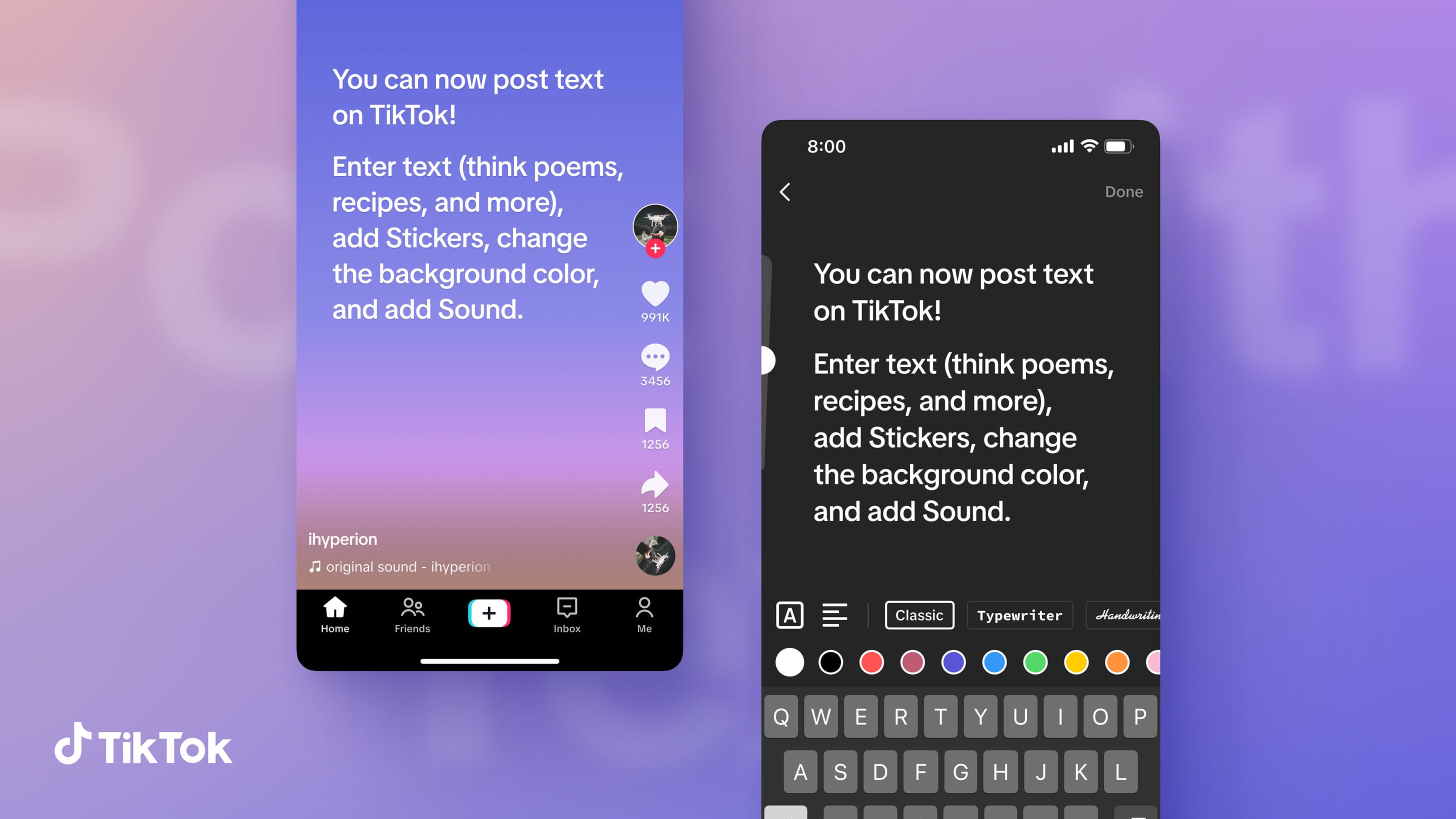
TikTok chose this week to announce a new option to share text posts on Feed and Stories. Text posts can be accessed through the Camera page, where users can choose from three options: photo, video, and text. Text posts can also be customized with sounds, stickers, location tagging, background colors, tags and hashtags.
Great. What does all the buzz about Threads, TikTok text and even Twitter’s rebrand all mean?!
With the launch of Threads and now TikTok text posts, the copycat conundrum is hard to miss, reports Axios’ Sara Fischer. Most of the major social media platforms now look the same, distinguished only by their philosophies, values and use cases.
But is there even a good reason for parent companies Meta and ByteDance to roll out text-based alternatives with Threads and TikTok?
Some of the possible explanations being discussed online include:
This is an opportunity for Instagram to reset the social graph. Users get to purge their Instagram following and decide who comes with them to Threads
There’s the “Twitter killer” theory, whereby Meta and ByteDance are trying to capitalize on the current implosion and user defection we’re seeing at the company formerly known as Twitter. This could be the digital version of the cage-match between Mark Zuckerberg and Musk that will probably never happen
It’s been suggested that Meta could be collecting data to train their own AI tool, LLaMa. And there’s no reason to doubt ByteDance wouldn’t be interested in doing the same
This rounds out the Meta and ByteDance universes. Now, users have every possible content combination from text and video to live and stories at their fingertips
This lowers the barrier to entry on these platforms. Even unproduced videos require a certain amount of atmospheric energy. You need decent lighting, sound and visuals to shoot video. But text doesn’t take more than a fourth grade reading level to create and consume content
It might very well be a combination of all of the above. Or it’s possible Threads and TikTok are rolling out text-based posts for a reason that has yet to be revealed.
Either way, should you lean in on text?
Yes… Maybe? Not too much. Audiences haven’t exactly been clamoring for more text options. Instead, this feels very much like a platform-derived push. Sort of like when Instagram tried to force the pivot to Reels. And look how that went.
There’s also no compelling evidence that people who are leaving Twitter are making their way to Threads or TikTok any more than Mastodon, Post, Bluesky, Spill or any other app trying to fill the void. Threads engagement has actually dropped 70% since launch.
The best strategy at the moment is to repurpose your content cross platform. It’s been frowned upon in the past but until the dust clears, X or Twitter or whatever it’s called stabilizes and the purpose of Threads or text on TikTok becomes clear, there isn’t really a strategic value to producing exclusive content for each platform.
If you’re going to spend your mental energy on anything…
Think about how you connect with people, especially Gen Z and Alpha, who are moving into smaller, private spaces.
Even Instagram head Adam Mosseri has said the company sees close connections moving into DMs and Stories.
And there’s been a trend of creators looking to migrate their audiences off social and into communities that aren’t controlled by algorithms: Discord servers, email lists, WhatsApp, Geneva or Telegram Groups, etc.
For brands and social media managers, that’s thinking about accessing those spaces. How do you show up in somebody’s DMs or Discord server if you’re not invited? It might be through new ad solutions (hello, Snapchat), creator product seeding or unconventional participation in spaces like gaming (remember when the brands all joined Animal Crossing?)
But the fact is, Gen Alpha is not embracing traditional social media platforms — so how will you find and connect with them?
Hint: it’s probably not through another feed-focused app.
What Happened When 15 of Twitter’s Top Celebrities Joined Threads
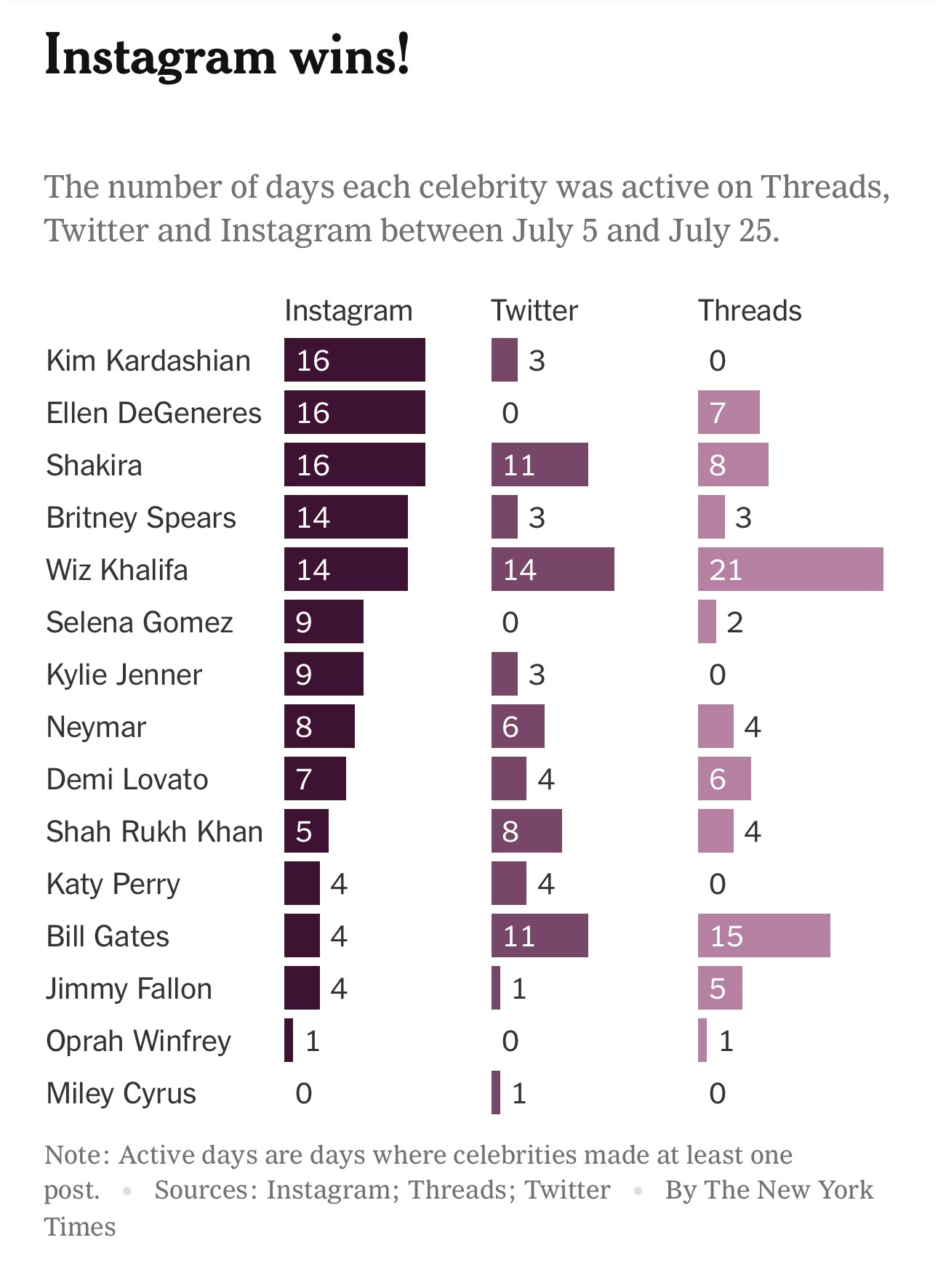 |
The New York Times compiled a list of 15 of some of the most-followed celebrities and high-profile figures on Twitter who joined Threads, including Katy Perry, Ellen DeGeneres, Bill Gates, Britney Spears, Shakira and Oprah Winfrey. Then they compared their activity on Twitter with their activity on Threads and Instagram every day between July 5 and July 25.
Instagram was the most popular with more than half of the celebrities the Times followed over the past three weeks, based on the number of days they were active on each platform (not counting Stories).
⚡️ STEAL THIS FORMULA
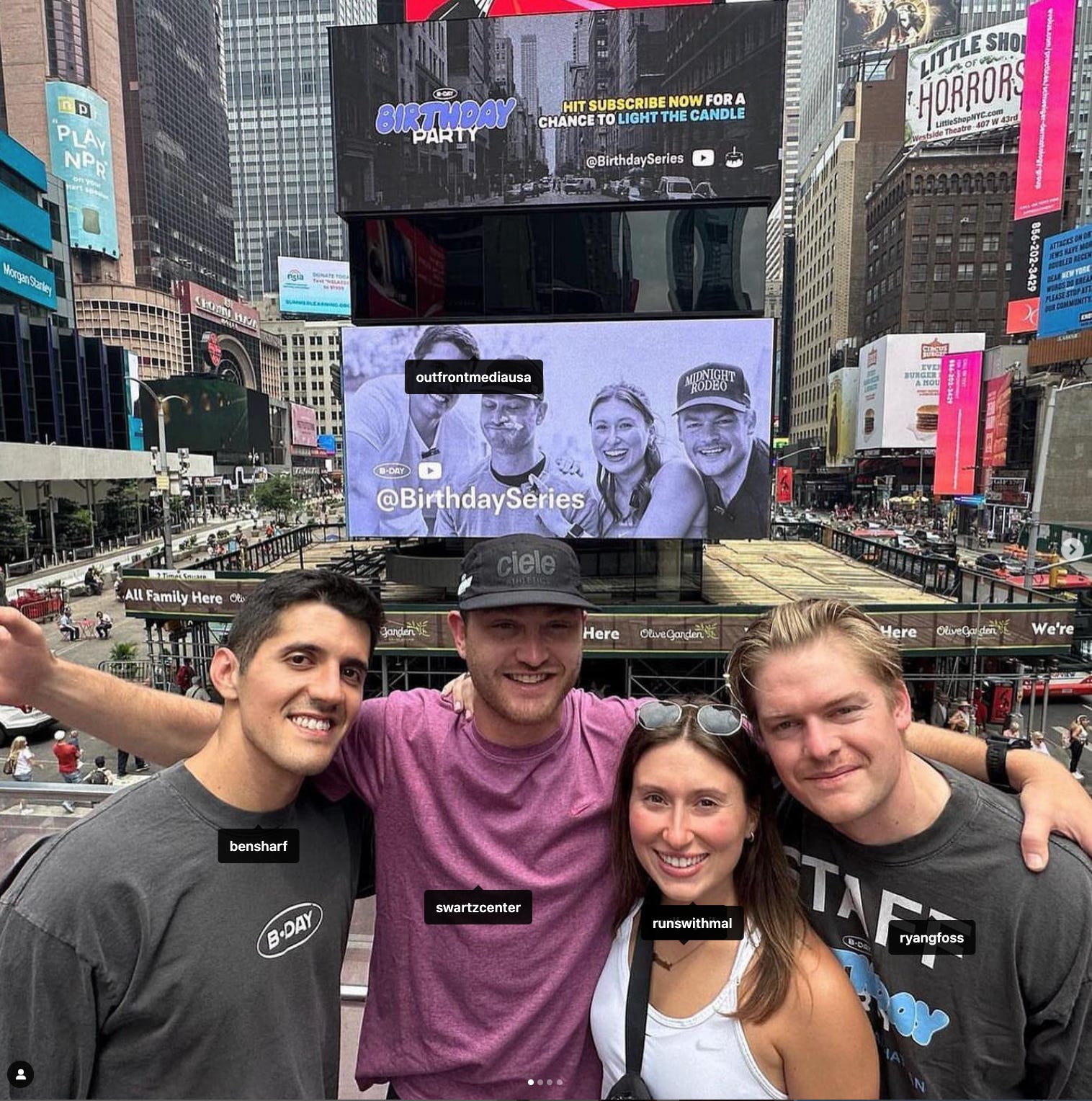 |
Entrepreneurs Ben Sharf and Ryan Foss-Skiftesvik are launching a YouTube channel called Birthday Series August 13. Every episode features guest creators, such as Milad Murg, Emily Austin, Tyler Swartz and Tejas Hullur, with an actionable bucket list item or “birthday wish” brought to life.
It’s a nice concept but what’s really fascinating is the list of sponsors already attached… Nike! Athletic Greens! Liquid Death! All before they even hit publish on their first video.
I talked to Ben, who has a background in business, to get the lowdown on how he’s essentially launching a media business and other lessons creators can take from this project.
Lia Haberman: Tell me about launching a YouTube channel like a traditional media business — securing sponsors before launch?
Ben Sharf: There are two ways you can do it. You can either build an audience and then figure out the business, or you can figure out the business and then build an audience. Most often, you see creators, they create out of the sheer love of creation, and then they realize they're sitting on millions of viewers and subscribers and followers. And then someone says to them, “Hey, you can monetize this.” At which point they're like, “How do I do that?” And then they find people like myself and Ryan. Whereas Ryan and I on Day One are like, “OK, I don't have a single person who's following me, but I understand how you can think about building an infrastructure to capitalize from a business perspective.” And so my running joke with people is that I got Nike to sponsor our video and I've never put out a piece of content before.
LH: What’s your elevator pitch to brands that makes a company like Nike sign on?
BS: I think the biggest one is essentially telling these brands that you're giving them an opportunity to get their products placed in situations that they can't replicate on their own. For example, we ended the [Montauk to Times Square] run with a billboard in Times Square with 20 big creators with products from these brands. There's a clip of me taking a sip of Liquid Death with my light headgear on at three o'clock in the morning running. You can't you can't really stage that and a lot of brands don't.
LH: So, it's offering product placement?
BS: It's product placement. It's UGC. And the third piece of it, which is unique about our approach, we're growth hacking eyeballs. What I mean by that is, we got all these sponsors and we've never launched a video but we have creators that have a cumulative 5 million+ followers across all socials who are very excited about these things and posting about it. So, they're getting a lot of organic eyeballs that they weren't even expecting. We will never commit to a number of impressions in terms of the deals we do. But it's more about: Here's the story. Here's the audience.
LH: What do you think creators get wrong about approaching sponsorships?
BS: One of the best pieces of advice that I can give is when you are having a conversation with a brand, put yourself in their shoes. What are the things that make them tick? What are the things that they're looking for? And how can you do the things that they're asking for. A very important thing to do when you get on the phone with these people is ask them what their goals are? What are their priorities? What are the main metrics they're trying to hit? Is it eyeballs? Is it sales? Is it brand awareness? The best thing you can do is craft your pitch to really strike a chord with a brand you're talking to.
Don't waste your time talking to brands that don't seamlessly integrate with what you're doing. So if you're a running creator, you probably shouldn't be talking to Bud Light about why they should sponsor you to give you beer because it just doesn't match up. If creators shift their perspective to be laser focused on brands that have a seamless integration with their persona online, it makes your life so much easier because you're sifting through so much noise out of the gate.
LH: Do you recommend creators approach a content series the way you have in finding sponsors first?
BS: I think you should just start creating. The only advice I could give is to have a little bit of foresight into the people you can go to if and when it's starting to be more real in the sense of monetization opportunities. I definitely wouldn't recommend doing it the way we did. Looking back at it, it's pretty crazy. There are pros and cons to it. But I do believe that we slowed ourselves down in some sense by over-engineering things, but I wanted to set it up for consistency and infrastructure. If you're creating good content and you have eyeballs, the business side will come.
*this interview has been lightly edited for length and clarity
📖 ON YOUR RADAR
Here are your nominees (and host) for the 2023 Streamy Awards -Tubefilter
The 20 most influential TikTok talent managers and agents helping creators build businesses in 2023 -Insider
Who owns TikTok memes? Anthony Fantano and Activision are debating that question -Tubefilter
TikTok is planning to compete with Shein and Temu in the US and beyond -Quartz
Actors’ Strike Hits Influencers: Social Media Stars Cancel Promo Deals After SAG-AFTRA Bars Them From Working With Studios -Forbes
The creator economy was already exploding. Then Hollywood went on strike -The Washington Post
How NIL has transformed student-athletes into athlete-influencers -Fast Company
Pinterest announced its global ad summit for advertisers and marketers, Pinterest Presents, is happening September 13 | 10am PT / 1pm ET. RSVP
BEFORE YOU GO…
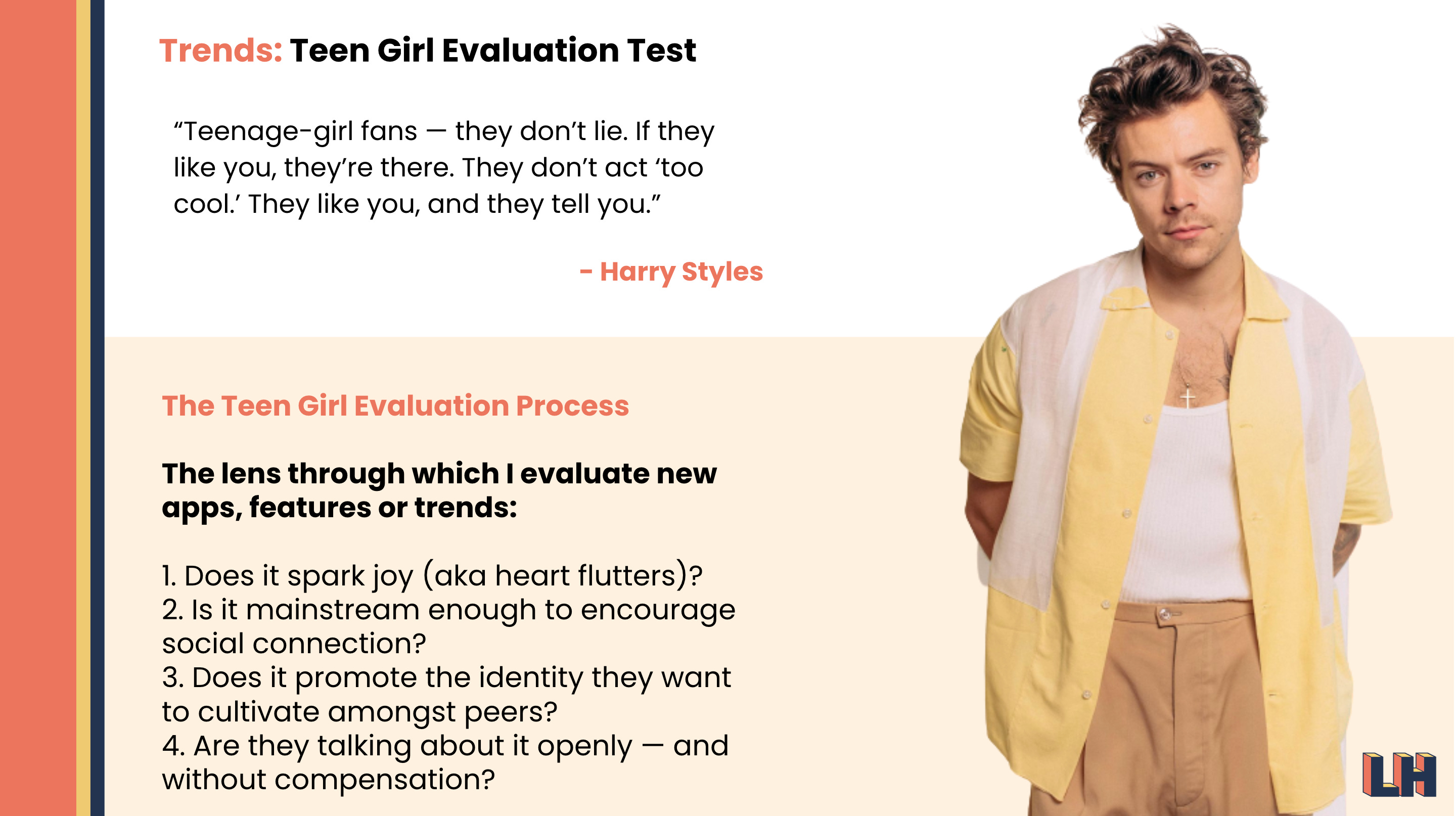 |
I’ve talked about the teen girl test before — looking at new apps, features or trends through the lens of an enthusiastic teen. I had to prep a trend report this week and included this framework for examining why certain things pop off and others don’t. I’m sharing the full report with paid subscribers but hope you enjoy this outtake!
| ||||||||||